


IEEE EDS/SSCS/CAS Mini-Colloquium
FRIDAY 11 September
C/ de Miquel dels Sants Oliver, 2
07122 Palma


PROGRAM
9:00 - 09:05
Opening
9:05-9:15.
Tribute to Michael S. Shur
Michael S. Shur had originally confirmed his attendance at ESSERC 2026 and this Mini-Colloquium, where he was scheduled to deliver this Distinguished Lecturer talk on behalf of the EDS.
Breaking Terahertz Barrier via Nonlinear Excitation of Synchronized Transistor Arrays
Michael Shur
Electronics of the Future, Inc., Vienna, VA 22181, USA
A Tribute to Dr. Michael S. Shur
"Dr. Michael “Misha” Shur, who passed away on 5 June 2026, at the age of 83, was one of the most influential figures in modern solid-state electronics and semiconductor science. His passing marks the loss of a remarkable scientist, inventor, educator, entrepreneur, and mentor whose contributions transformed both research and technology worldwide.
Over a distinguished career spanning more than five decades, Dr. Shur held academic positions at several leading institutions, culminating in his role as the Patricia W. and C. Sheldon Roberts Professor of Solid State Electronics at RPI. Even after retirement, he remained an active researcher and intellectual leader.
He committed to attend ESSERC 2026 in Palma de Mallorca, and to give a talk, as IEEE Distinguished Lecturer, in the Joint EDS/SSCS/CAS Mini-Colloquium schduled to September 11. Last April he sent us the title and talked of his talk, published here.
A pioneering authority in semiconductor physics, high-speed electronics, optoelectronics, terahertz science, plasmonics, and ultraviolet technologies, Dr. Shur made foundational contributions that influenced modern communications, sensing, healthcare, photonics, energy systems, and water purification technologies. He authored >1,000 scientific publications, held over 375 patents, accumulated >84,000 citations, and achieved an h-index of 127. His work bridged fundamental scientific discovery and practical innovation, influencing commonly used technologies.
His extraordinary achievements earned numerous international honors, including election as Fellow of multiple prestigious scientific societies (including IEEE) and receipt of major awards from IEEE, the Electrochemical Society, and many other organizations. Beyond academia, he was a successful entrepreneur who co-founded several technology companies, most notably Sensor Electronic Technology, Inc., a leader in deep-ultraviolet LED technology.
Yet perhaps his most enduring legacy lies in the countless students, researchers, and colleagues he inspired. Renowned for his generosity, humility and intellectual curiosity, he shaped careers and fostered collaborations across disciplines and continents. To many, he was not only a brilliant scientist but also a trusted mentor, colleague, and friend.
Dr. Shur leaves behind a remarkable legacy of scientific excellence, innovation, entrepreneurship, and humanity. His discoveries will continue to advance technology, while his example as a scholar, mentor, and gentleman will inspire generations to come.
9:15-10:05
Leveraging semiconductor technology for the benefit of society
Fernando Guarin (Director of IEEE Division I)
10:05-10:55
Power efficient WBG devices for the green transition
Mikael Ostling (KTH, SE)
10:55-11:25
Coffee Break
11:25-12:15
Holistic solutions to future computing - not only scaling
Francesca Iacopi (Purdue University, US)
12:15-13:05
Status of the Compact modeling and its Verilog-A standardization
Wladek Grabinski (MOS-AK, CH and IHP OpenPDK, DE)
13:05-14:25
Lunch
14:25-15:15
Graphene thin film technology for neural interfaces
José Antonio Garrido (ICN2, Barcelona, Spain)
15:15-16:05
Energy-Efficient Analog IC Design: Exploring Solutions at De vice, Circuit and System Levels
Antonio López (Public University of Navarra, Spain)
BIOSKETCHES


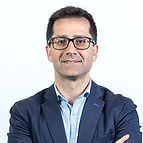

Dr. Fernando Guarin retired as a Distinguished Member of Technical Staff at Global Foundries in East Fishkill New York where he led the GF reliability team responsible for the qualification of 5G technologies. In 2015 he retired from IBM’s Semiconductor Division after 27 years as Senior Member of Technical Staff. He earned his BSEE from the “Pontificia Universidad Javeriana”, in Bogotá, Colombia, the M.S.E.E. degree from the University of Arizona, and the Ph.D. in Electrical Engineering from Columbia University, NY. He has worked in microelectronic reliability for over 42 years.
From 1980 until 1988 he worked in the Military and Aerospace Operations division of National Semiconductor Corporation. In 1988 he joined IBM’s microelectronics division where he worked in the reliability physics and modeling of Advanced Bipolar, CMOS and Silicon Germanium Bi-CMOS technologies. Most recently he was the leader of the team qualifying GlobalFoundries RF 5G technology offerings.
Dr. Guarín is an IEEE Life-Fellow, Distinguished Lecturer for the IEEE Electron Device Society EDS, where he has served in many capacities including member of the IEEE’s EDS Board of governors, chair of the EDS Education Committee, Secretary for EDS. He was the EDS President 2018-2019. He is a member of the IEEE Board of Directors as the 2026=2027 Division I Director.
Professor Mikael Östling received his MSc and the PhD degrees from Uppsala University, Sweden. He holds a position as professor in solid state electronics at KTH, Royal Institute of Technology in Stockholm, Sweden. He was the deputy president of KTH 2017-2022. He previously held the position as dean of the School of Information and Communication Technology, KTH, and head of department. Mikael was a senior visiting Fulbright Scholar at Stanford University, and a visiting professor with the University of Florida, Gainesville. Mikael was an editor of the IEEE Electron Device Letters and EiC of IEEE J-EDS. He is a Life Fellow of the IEEE and Fellow of the Electrochemical Society.
Francesca Iacopi is an IEEE and MRS Fellow with nearly 30 years’ industrial and academic R&D expertise in semiconductor technologies spanning interconnects, devices and packaging. Her focus is the translation of basic scientific advances in nanomaterials and novel device concepts into implementable integrated technologies. She is known for her seminal work on the integration of porous dielectrics in on-chip interconnects, and for the invention of the alloy -mediated epitaxial graphene platform on SiC on silicon wafers. She was recipient of an MRS Gold Graduate Student Award (2003), an Australian Research Council Future Fellowship (2012), a Global Innovation Award in Washington DC (2014) and was listed among the most innovative engineers by Engineers Australia (2018). In 2024, she left her tenured professorship at the University of Technology Sydney to join imec USA as the inaugural Director of the Imec Indiana R&D Center based at Purdue University, IN, USA. Francesca regularly serves in technical and strategic committees for IEEE and the Materials Research Society. She is an Elected Member to the IEEE EDS Board of Governors (2021, 2024). She is also the founder and inaugural Editor-in-Chief of the IEEE Trans. on Materials for Electron Devices.
Wladek Grabinski, PhD, is a semiconductor modeling expert with over 30 years of experience in CMOS, BiCMOS, and RF technologies. He earned his doctorate from the Institute of Electron Technology, Warsaw, in 1991, and served at ETH Zürich and EPF Lausanne supporting process characterization and compact MOSFET model development. Formerly with Motorola/FSL in Geneva, he now consults on advanced SPICE modeling, Verilog-A standardization for low-power analog/RF IC applications within the European OpenPDK Initiative. Wladek authored the "Compact/SPICE Modeling" chapter in the Springer Handbook of Semiconductor Devices and has published over 70 papers. He has established the ESSDERC Track3 on SPICE Modeling, was also involved in TPCs of IEEE EDTM, ITRS, SBMicro, LADEC, SISPAD, MIXDES; as a Senior IEEE EDS member has mentored EPFL IEEE Student Branch. Since 1999, Wladek has been managing the MOS-AK workshop series to promote open-source SPICE/Verilog-A modeling and FOSS IC design flows.
Reference
José A. Garrido is an ICREA Research Professor at the Catalan Institute of Nanoscience and Nanotechnology (ICN2) in Barcelona, where he leads the Advanced Electronic Materials and Devices group. He received his Master’s and PhD degrees in Telecommunication Engineering from the Polytechnic University of Madrid, and a habilitation degree from the Technical University of Munich. Since 2017 he has served as ICN2’s Vice-director, contributing to its scientific and innovation strategy. His research focuses on the science and technology of 2D materials and their application in bioelectronics and neural interfaces. He leads major national and European research initiatives aimed at developing novel neural interfaces for biomedical applications. He is also co-founder and Chief Scientific Officer of INBRAIN Neuroelectronics, an ICN2 spin-off company developing graphene-based neural devices for medical applications.
Antonio López-Martín is an analog and mixed-signal IC designer with over 30 years of experience in CMOS technologies. He earned his doctorate from the Public University of Navarra, Pamplona (Spain) in 1999. He has been a visiting and adjunct professor with the New Mexico State University, Las Cruces, NM, and an invited researcher with the Swiss Federal Institute of Technology (ETH), Zurich. Currently, he is a Professor at the Public University of Navarra. He is also Director of the Digital Transition Hub of the UNITA European Alliance and head of the Communications, Signals and Microwaves group. He has published over 450 technical contributions in books, journals, and conferences. He also holds 6 international patents.
Dr. Lopez was an Associate Editor of 11 journals including IEEE TCAS-I and IEEE TCAS-II. He is a former Chair of the IEEE CASS Spain Chapter and has served in TPCs of over 60 conferences.
How to attend
ESSERC 2026 attendees are welcome to attend by simply showing their ESSERC badge.
No separate registration is required.
Please note that seating is limited.